This past December, I attended an excellent presentation on Painless Plot Pointers given by David Macinnis Gill. David is the author of young adult and middle grade novels and has taught plot structure for the MFA program at Vermont College.
In his workshop, David walked us through the new Three Act plot structure. The traditional plot structure divides a novel into three roughly equal acts: beginning, middle, and end. But with this updated method, the Second Act is expanded, taking up about 50% of the book. The new Act 2 consists of three parts with a “Turn” in the middle and two mirror journeys on either side. The Turn occurs roughly at the midpoint of the book. This incident damages the hero so they cannot go back and challenges their beliefs, redefining their journey ahead.
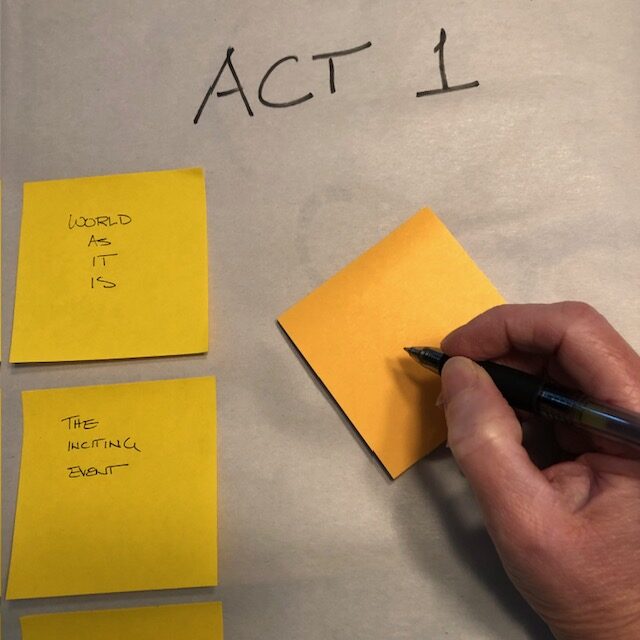
David walked us through the key scenes of each of these Acts and introduced his “Sticky Note Plotting” method for identifying and ordering these scenes. When he’s working on a novel, he uses actual sticky notes to record his scene ideas and position them in the plot grid. Then he employs the resulting outline to guide him as he drafts his novels. We had an opportunity to apply his technique in a group exercise as part of the workshop.
As for me, I’m more of a pantser than a plotter when drafting a novel. But as I’ve just completed the first draft of my latest novel-in-progress, I’m now in revisions. This gave me the perfect opportunity to analyze my manuscript and identify these plot beats in my own story. It’s helping me find places where I can strengthen my story and character arcs.
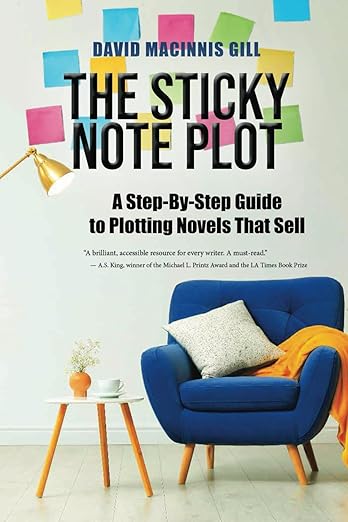
If you wish to learn more about David’s plotting method, check out his book. The Sticky Note Plot: A Step-By-Step Guide to Plotting Novels That Sell is available on Amazon in several formats. You can find it here.