A few years back, when attending a writer’s conference, I signed up for a group pitch session with a literary agent. I had a complete and polished manuscript and had honed a pitch. From prior experience (albeit years earlier), I assumed the pitch would consist of genre, word count, and the back cover teaser. When it was my turn, I recited my well-rehearsed lines. The agent smiled in all the right places and was complimentary, then she asked me about comps. I didn’t have an answer. She responded that I needed to “do some research.”
I recently attended a very good SCBWI presentation on this topic. Agents and editors alike now expect authors to be able to come up with comparable titles for their books. The agents use these to pitch their client’s projects to editors, and editors use them to present to their acquisitions and marketing departments. This information helps them get a quick feel for your project, determine its place in the market, and gauge how well they think it will sell.
These comps have a typical formula: “My book is X meets Y.” In place of the variables, you fill in two titles that are comparable to your book in some aspect. But there are many more guidelines around this formula. Ideally, the two titles should have been published recently (i.e., within the past 5 years). They should be successful books, but not runaway bestsellers. For instance, don’t compare your fantasy to Harry Potter or your YA dystopian to The Hunger Games. They also should reflect the genre, tone, and target reader of your book. Sounds simple, but it’s not.
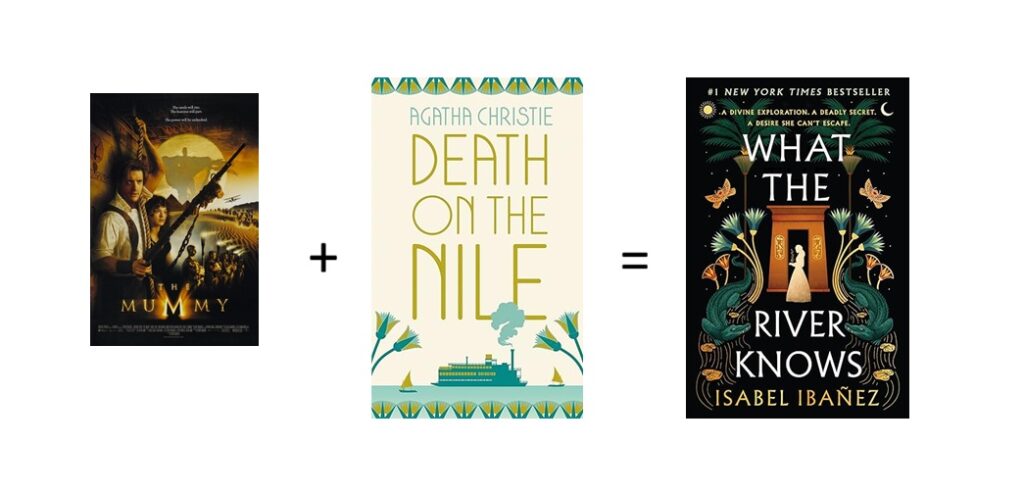
This formula has been around for years. In the past, it was most commonly used to pitch high-concept novels. For example, NYT bestseller What the River Knows by Isabel Ibañez is described as “The Mummy meets Death on the Nile.” The Mummy evokes the magic, the archeology, and the Cairo setting of the book, while Death on the Nile also suggests the mystery behind the death of the young protagonist’s parents. Note that one of these titles is a film and the other an Agatha Christie classic. Neither one reflects her book’s YA genre or meets the recent publication criterion (unless she intended the 2017 version of the movie). These exceptions demonstrate that these are not hard rules, but rather guidelines.
I really struggled with this for Bedlam Bewitched. It’s a YA contemporary fantasy, but not dark academia or traditional paranormal romance (There are no vampires or werewolves). It’s also part cozy mystery with plot threads involving the disappearance of Cory’s father and the reappearance of Jack’s formerly deceased fiancée. But it’s not a murder mystery with an amateur sleuth. I would categorize it as a “cozy fantasy with witches.” Although I searched the YA shelves back then, I still had trouble finding comps. Fortunately, the popularity of “cozy fantasy” and “witchy” novels have surged in the past year, making it easier to find companion titles. This new information will better prepare me for my next novel.
As a reader, what do you think of this formula? Would an “X meets Y” pitch entice you to pick up a book? Could you describe your latest writing project or favorite novel using this technique?